Many businesses fail to recognize the rapid pace of this change. Google searches now feature AI summaries 50 percent of the time. These AI overviews reduce the top organic result’s click-through rate by 15-35% on average. The numbers tell an even more compelling story – 27% of consumers now turn to AI tools like ChatGPT instead of traditional search engines.
The market implications are significant. AI tools could capture up to 14% of the search market by 2028, up from 6% in 2024. US revenue worth $750 billion will flow through AI-powered search. Unprepared brands might see their traffic from traditional search channels decline anywhere from 20 to 50 percent.
This piece explores content adaptation strategies for AI search engine optimization and Generative Engine Optimization (GEO) – an emerging concept from late 2024 that focuses on optimizing content for AI-driven search engines. Your business can succeed in this period of search with practical strategies we’ll discuss.
The Shift from Traditional to AI Search
AI-powered alternatives are replacing traditional search engines faster than ever. This change affects how people find and use information online.
How AI search engines differ from Google
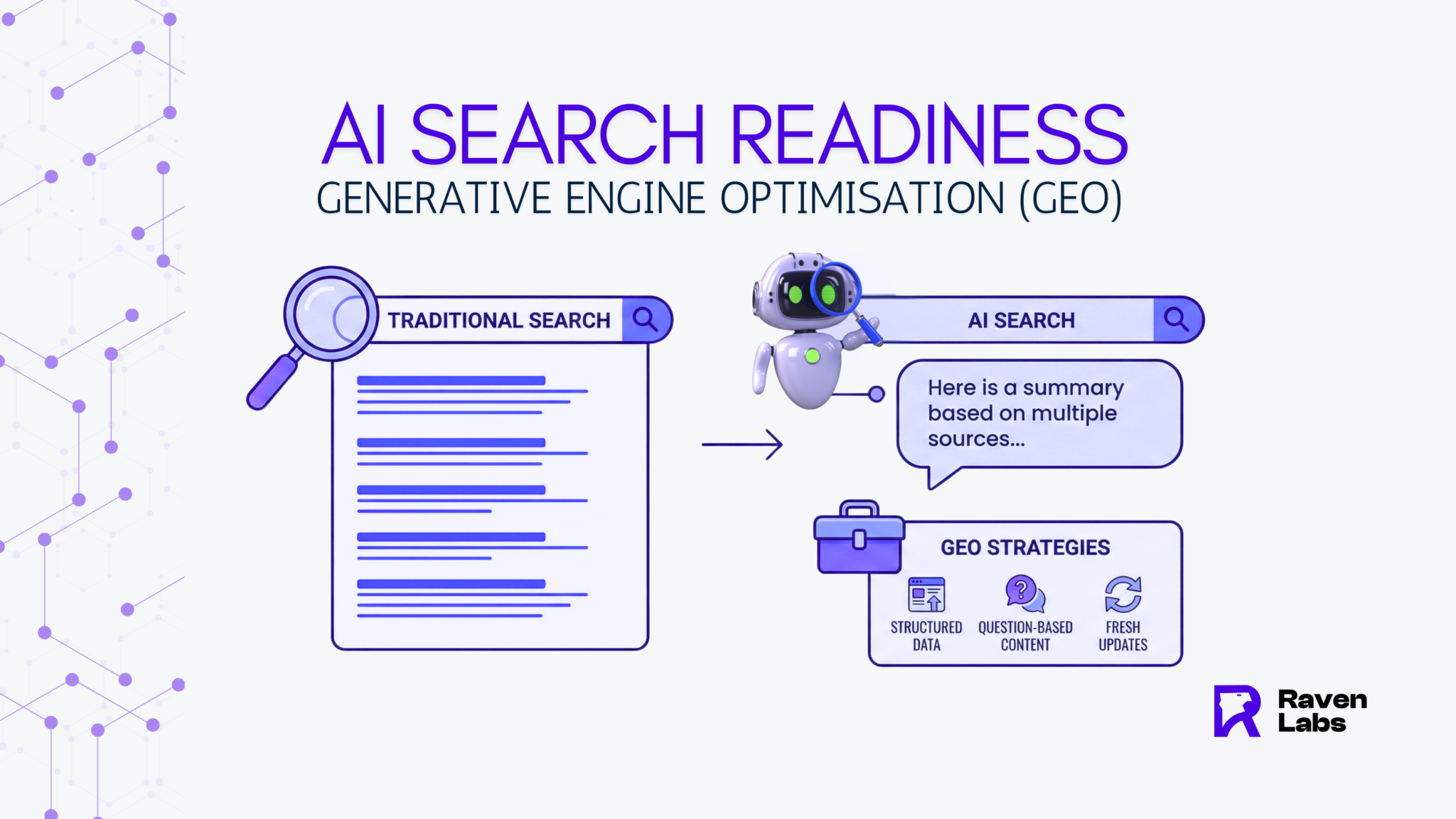
AI search engines give direct, conversational answers to questions instead of showing lists of links based on keywords. These engines understand what users want through natural language processing. Users get answers that fit their context rather than having to match exact keywords. People can ask questions in everyday language and get information combined from many sources at once.
AI search engines remember what you talked about earlier. Users can ask follow-up questions without starting over or rephrasing their search. The experience feels more like talking to an assistant compared to the broken-up process of traditional search.
Why click-through rates are dropping
New data shows a dramatic effect on website traffic. Organic click-through rates for informational queries with Google AI Overviews have dropped 61%. Paid clicks have fallen even more at 68%. Queries without AI Overviews saw organic CTRs fall 41% compared to last year.
User behavior has changed fundamentally. About 80% of people now use “zero-click” results for at least 40% of their searches. This leads to a 15% to 25% reduction in organic web traffic. People visit individual websites less often because they get answers right in their search results.
The rise of AI Overviews and chat-based queries
AI Overviews showed up in 42.51% of Google search results in Q4 2024. This number grew by 8.83 percentage points from the previous quarter. AI chatbots are growing too – ChatGPT now has more than 800 million weekly active users, twice as many as in February 2025.
Conversational search is growing faster across all age groups. About 60% of searches end on the results page. LLMs like ChatGPT and Perplexity are getting more search traffic. In July 2025, 5.99% of desktop browser searches went to LLMs – more than double the previous year’s numbers.
Understanding Generative Engine Optimization (GEO)
Generative Engine Optimization (GEO) is a vital change in website adaptation needed to stay visible in the evolving search world.
What is GEO and how it compares to SEO
GEO helps optimize content for AI-powered search engines that generate direct answers instead of link lists. SEO’s goal focuses on ranking well in search results pages, while GEO ensures visibility in AI-generated responses.
These key differences separate GEO from SEO:
- Primary goal: SEO earns clicks from ranking positions; GEO increases visibility in AI answers
- Output format: SEO targets link listings; GEO targets combined responses
- Success metrics: SEO measures rankings and traffic; GEO tracks citations and brand mentions
A 2025 study showed that detailed schema strategies led to 30-40% better visibility in AI search responses.
Why AI search favors structured, concise answers
AI search engines prefer content with clear, verifiable information that they can extract without much interpretation. Content creators used to design mainly for human readers. Now, successful AI optimization needs content that AI systems can extract, understand, and cite quickly.
Question-answer formats work well with AI search behavior. Users now ask conversational questions averaging 23 words, compared to Google’s average of 4. Content with high factual density has better citation potential. AI systems look for explicit semantic signals to grasp meaning and relationships.
The role of schema markup and structured data
Structured data connects traditional web content with AI-comprehensible information. Schema markup acts as a translator that turns human-readable content into machine-comprehensible data structures.
Schema markup helps AI engines understand context better. Your site can create multiple pathways for AI discovery by using structured data types like FAQ, HowTo, and Product. This integrated approach creates your site’s “content knowledge graph” and shows machines your brand’s value proposition.
How to Optimize Your Content for AI Search
AI search optimization needs a different approach than traditional SEO tactics. Here are five key strategies that will boost your visibility in AI-generated responses.
Use natural language and question-based headings
AI systems give priority to content with question-based headings that match how people ask questions. You can turn basic headings like “Email Marketing Benefits” into “How Does Email Marketing Increase ROI?”. This method lines up with how people search and helps AI systems cite your content when they answer questions.
Create content clusters to build topical authority
You can build topical authority by organizing related content into clusters. A pillar page should cover the broad topic while supporting cluster pages dive into specific subtopics. AI engines recognize this structure as expertise. Your content becomes more likely to appear in AI-generated answers. The connections between your pages become clear to AI through internal linking.
Update content regularly with fresh data
Content becomes outdated faster in AI search. What stayed relevant for 24-36 months now needs updates within 6-9 months. Your content needs updates every 3-6 months in dynamic industries. Less volatile fields require updates every 6-9 months. Fresh updates tell AI engines your content remains reliable.
Add FAQ and How-To sections for snippet readiness
FAQ sections work well for AI visibility. AI-generated answers include list formats 78% of the time. FAQ schema markup tells AI platforms directly: “This is a question. This is the authoritative answer”. Your answers should be brief (40-60 words) and complete enough to make sense on their own.
Make use of third-party platforms and user-generated content
AI engines look beyond your website. They analyze reviews, forum discussions, and user content across the web. ChatGPT and Google AI Mode often cite content from Reddit and Quora. Your chances of appearing in AI answers improve when customers leave detailed reviews on trusted external sites.
Building Long-Term AI Search Readiness
Getting your organization ready for AI search needs a clear plan that goes beyond content optimization. Your team needs new skills, tools, and proper arrangement of resources.
Train teams on AI SEO strategy and tools
Your first step should be investing in specialized AI search training. Industry courses now provide practical frameworks for AEO and GEO. Programs like SE Ranking Academy help teams gain hands-on experience with vector embeddings and AI-ready content strategies. The training covers AI fundamentals and shows how to optimize content for summarization.
Track your brand’s presence in AI search engines
Your brand needs consistent monitoring across AI platforms. BrightEdge suggests tracking brand mentions and citations in all generative engines. Tools like AI Visibility by Amplitude help calculate how often your brand shows up in AI responses through dedicated visibility scores. Testing with standardized prompts remains valuable to get a full picture.
Set up KPIs for AI search performance
Traditional metrics must adapt to this new landscape. Smart teams now track AI bot crawlability, brand mentions in tools like Perplexity, and content “chunkability”. The key metrics to focus on include visibility in AI results, user selection rates, and conversion rates from AI referrals.
Work together across SEO, content, and marketing teams
While 54% of organizations let SEO teams lead AI search initiatives, success depends on teamwork. SEO professionals need support from content, PR, and leadership teams. Without this cooperation, even the best experiments can fail during the shift to Generative Engine Optimization.
Is Your Website Ready for the Era of AI Search? Your business might be falling behind if it isn’t optimized for ChatGPT, Google AI Overview, and AI-powered answers.
Book a Free AI Search Readiness Audit with Raven Labs Australia
Conclusion
AI search marks a major change in how users find information online. Traditional search behaviors are declining while AI-powered alternatives gain momentum at an unprecedented pace. Companies must adapt quickly or risk losing substantial visibility and traffic in this new digital world.
Generative Engine Optimization emerges as the natural progress of SEO practices. It focuses on gaining citations within AI-generated responses rather than ranking in link-based results. Success requires a strategic approach that combines structured data implementation with content designed for AI comprehension and citation.
Question-based headings, topical content clusters, regular data updates, FAQ sections, and third-party platform participation will substantially improve your chances of appearing in AI-generated answers. These tactics alone won’t guarantee long-term success.
Organizations need to develop complete AI search readiness through team training, consistent tracking of AI visibility, new performance metrics, and cross-departmental collaboration. An integrated approach ensures that even well-optimized content achieves its full potential in the AI search ecosystem.
Now is the time for action. Brands that delay adaptation risk permanent relegation to the background as AI search continues its rapid rise. Is Your Website Ready for the Era of AI Search? If your business isn’t optimized for ChatGPT, Google AI Overview, and AI-powered answers, you’re already falling behind.
Book a Free AI Search Readiness Audit with Raven Labs Australia
Smart businesses see this transformation not just as a challenge but as an unprecedented chance to connect with audiences meaningfully. Those who adopt AI search optimization today will without doubt become the digital leaders of tomorrow.
FAQs
Q1. What is Generative Engine Optimization (GEO) and how does it differ from SEO?
Generative Engine Optimization (GEO) is the practice of optimizing content for AI-powered search engines that generate direct answers. Unlike SEO, which aims to rank well in search results pages, GEO focuses on increasing visibility in AI-generated responses. GEO targets synthesized responses rather than link listings and measures success through citations and brand mentions.
Q2. How can I optimize my content for AI search engines?
To optimize for AI search, use natural language and question-based headings, create content clusters to build topical authority, update content regularly with fresh data, add FAQ and How-To sections, and leverage third-party platforms and user-generated content. These strategies help increase your visibility in AI-generated responses.
Q3. Why are click-through rates dropping in traditional search results?
Click-through rates are dropping because AI search engines provide direct, conversational answers to queries, reducing the need for users to visit individual websites. Additionally, the rise of “zero-click” results means users often find the information they need directly in the search results, without clicking through to a website.
Q4. How important is structured data for AI search optimization?
Structured data is crucial for AI search optimization. It serves as a bridge between traditional web content and AI-comprehensible information, helping AI engines understand context. Implementing schema markup for FAQs, HowTo guides, and Products creates multiple pathways for AI discovery and citation, increasing your chances of being featured in AI-generated answers.
Q5. What steps can organizations take to build long-term AI search readiness?
To build long-term AI search readiness, organizations should train teams on AI SEO strategy and tools, track their brand’s presence in AI search engines, set up new KPIs for AI search performance, and foster collaboration across SEO, content, and marketing teams. This holistic approach helps businesses adapt to the evolving search landscape and maintain visibility in AI-powered results.